
 604-694-0015


Lower Blepharoplasty Vancouver
November 12, 2026
Back To Blog
Lower blepharoplasty in Vancouver is one of the most sought-after facial rejuvenation procedures for patients who notice persistent puffiness, hollowing, or loose skin beneath the eyes that no amount of rest seems to resolve. These changes are a natural part of aging, yet they can make a person appear fatigued or older than they feel. At Pacific Plastic Surgery, Dr. Ashley Tregaskiss, a board-certified plastic surgeon with over 20 years of experience, approaches lower eyelid surgery with the anatomical precision that comes from a decade at Vancouver General Hospital treating complex craniofacial and head and neck conditions. If you are researching your options, call the practice to book an in-person or virtual consultation.
What Lower Blepharoplasty Addresses: Understanding Under-Eye Changes
The under-eye area is one of the earliest regions of the face to show visible signs of aging, and the reasons are rooted in anatomy. As the years pass, the orbital septum, a thin membrane that holds fatty tissue in place around the eye socket, gradually weakens. Fat that was once evenly distributed begins to bulge forward, creating the appearance of under-eye bags. Simultaneously, the skin beneath the lower eyelid loses collagen and elastin, resulting in fine creases, laxity, or a crepey texture. Some patients also experience a deepening of the tear trough, the groove that runs from the inner corner of the eye toward the cheek, which can create a shadowed or hollow appearance.
Lower blepharoplasty is designed to address one or more of these concerns through a tailored surgical approach. Depending on your anatomy and goals, Dr. Tregaskiss may recommend removing or redistributing excess fat, tightening the supporting structures of the lower lid, or refining the skin itself. Patients considering comprehensive facial rejuvenation often explore lower blepharoplasty alongside procedures such as a neck lift or a deep plane facelift, since the eyes and midface work together visually. A thorough consultation helps identify which combination of approaches may best serve your anatomy.
Lower Blepharoplasty Technique: Surgical Approaches Explained
One of the most important factors in lower blepharoplasty outcomes is the surgical technique selected. There are two primary approaches, and the appropriate choice depends on the patient’s specific anatomy, skin quality, and the nature of the concerns being addressed.
Transconjunctival Approach
When the primary concern is excess or poorly positioned fat without significant skin laxity, a transconjunctival incision placed on the inner surface of the lower eyelid is often preferred. Because this incision is concealed entirely within the lid, it leaves no visible scar on the outer skin. This technique is particularly well-suited to younger patients or those with good skin tone who primarily experience bulging beneath the eyes.
Subciliary Approach
When skin laxity, fine lines, or muscle banding contribute to the under-eye appearance, a subciliary incision, placed just below the lash line, allows the surgeon to access and refine the skin and underlying structures. The resulting scar is positioned in a natural crease where it typically becomes very difficult to detect as healing progresses.
In many cases, fat is not simply removed but carefully redistributed to soften the tear trough and restore a smoother transition between the eyelid and cheek. Dr. Tregaskiss’s background in craniofacial and head and neck surgery at Vancouver General Hospital informs the level of anatomical detail he brings to eyelid surgery. You can explore the full scope of eyelid surgery at Pacific Plastic Surgery to learn how upper and lower procedures may complement one another.
Recovery, Results, and What to Expect After Lower Blepharoplasty in Vancouver
Understanding the recovery process is an important part of deciding whether lower blepharoplasty is right for you at this point in your life. Most patients find the initial recovery period manageable with appropriate preparation and realistic expectations.
In the first few days following surgery, some swelling and bruising around the lower eyelids is expected. Keeping the head elevated, applying cool compresses, and avoiding strenuous activity during this period helps support the healing process. Most patients take three to five days off work and keep to light activity for the first two weeks, gradually increasing activity after two to three weeks and resuming full activities after about six weeks. Swelling and bruising typically settle over the first one to two weeks, and full recovery, including the fading of scars, can take up to six weeks.
Patients who want to see representative outcomes are welcome to browse the eyelid surgery before and after photo gallery on the Pacific Plastic Surgery website, which offers a candid look at real patient results. For those curious about additional insights on recovery and preparation, the Pacific Plastic Surgery blog covers a range of topics relevant to patients planning facial procedures in Vancouver.
Why Choose Pacific Plastic Surgery for Lower Blepharoplasty in Vancouver?
Choosing a surgeon for lower blepharoplasty in Vancouver is a decision that deserves careful consideration. Dr. Ashley Tregaskiss is a board-certified plastic surgeon in Vancouver with over 20 years of experience and a focus on advanced facial and neck rejuvenation. After a decade at Vancouver General Hospital treating complex craniofacial and head and neck conditions, he transitioned fully into private practice in 2024, bringing exceptional anatomical expertise and surgical precision to his aesthetic work.
Pacific Plastic Surgery has earned five-star ratings on both Google and RateMDs, reflecting a practice culture grounded in personalized care. Both in-person and virtual consultations are available, making it straightforward for patients across the Greater Vancouver region to begin their journey. To learn more, visit our team and offices page.
Frequently Asked Questions About Lower Blepharoplasty in Vancouver
Am I a good candidate for lower blepharoplasty?
Good candidates are generally adults in reasonable health who have persistent under-eye bags, hollowing, or skin laxity that has not responded to non-surgical approaches. Patients should have realistic expectations about outcomes and understand that surgery addresses anatomical changes, not lifestyle factors. A consultation with Dr. Tregaskiss is the most reliable way to assess your candidacy and discuss which surgical approach may be appropriate for your anatomy and goals.
How is lower blepharoplasty different from upper eyelid surgery?
Lower blepharoplasty focuses on the area beneath the eye, targeting fat herniation, hollowing, and skin laxity in the lower lid and tear trough region. Upper blepharoplasty addresses the upper eyelid, where drooping skin can affect both appearance and, in some cases, the visual field. Many patients benefit from addressing both areas during a single surgical session. Dr. Tregaskiss evaluates the full periorbital region to recommend the approach best suited to your concerns.
Will there be visible scarring after lower blepharoplasty?
Scar visibility depends significantly on the surgical technique used. The transconjunctival approach leaves no external scar at all, as the incision is placed inside the lower lid. When a subciliary incision is used, it is positioned just beneath the lash line and typically becomes very subtle as healing progresses. Dr. Tregaskiss discusses incision placement and expected healing in detail during your consultation so you can make an informed decision.
How long do the results of lower blepharoplasty tend to last?
Lower blepharoplasty can provide long-lasting improvement because structural changes, such as fat removal or redistribution and tissue tightening, address the underlying anatomy rather than masking it temporarily. While the natural aging process continues, many patients find their results remain meaningful for many years. Maintaining a consistent skincare routine and protecting skin from sun exposure may help support longer-lasting outcomes. Results will vary by individual based on genetics, lifestyle, and skin quality.
Does Pacific Plastic Surgery serve patients outside of Vancouver?
Yes. Pacific Plastic Surgery welcomes patients from across the Greater Vancouver area and beyond, including Langley, Surrey, and Burnaby. Virtual consultations are available for those who prefer to begin the process remotely before traveling for an in-person assessment. If you are researching lower blepharoplasty in Vancouver and want to connect with Dr. Tregaskiss, you can call the practice or use the online contact form to request an appointment.
Book Your Lower Blepharoplasty Consultation
If you are ready to take the next step toward under-eye rejuvenation with lower blepharoplasty in Vancouver, Pacific Plastic Surgery is here to guide you with personalized, expert care. Contact us today or call us to learn more about scheduling your consultation with Dr. Ashley Tregaskiss. In-person and virtual appointments are both available.

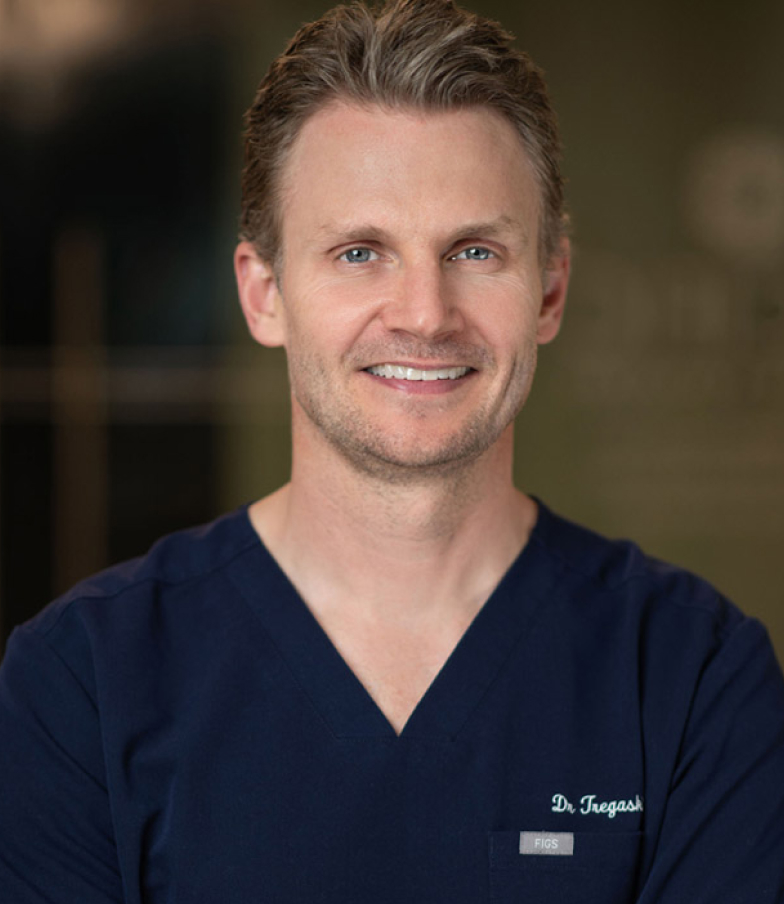
DR. ASHLEY TREGASKISS
COSMETIC, PLASTIC, AND RECONSTRUCTIVE SURGEON | BLOG
Dr. Ashley Tregaskiss is a board-certified plastic surgeon in Vancouver with over 20 years of experience and a practice increasingly dedicated to advanced facial and neck rejuvenation.
Following a decade at Vancouver General Hospital treating complex craniofacial trauma and head and neck conditions, he transitioned fully into private practice in 2024. This background provides a level of anatomical expertise and surgical precision that directly informs his aesthetic work.
Dr. Tregaskiss specializes in facelift and neck lift surgery, eyelid rejuvenation, facial fat transfer, and laser-based skin rejuvenation. He has particular expertise in combining facial surgery with laser treatments to enhance skin quality and achieve more refined, natural results. His approach is defined by careful planning, technical precision, and a commitment to outcomes that are balanced, elegant, and undetectable.