
 604-694-0015

The First Six Weeks After Breast Augmentation: A Recovery Timeline
September 23, 2026
Back To Blog
Most of the worry before breast augmentation is not about the operation. It is about the six weeks afterwards: when you can drive, when you can lift a toddler, when your chest stops feeling like it belongs to someone else. Pacific Plastic Surgery works to a clear set of milestones, and knowing them in advance is what lets you book the right time off, line up the help, and stop guessing. Here is that sequence, stage by stage.
The First Week: The Hardest Stretch
The first week is typically the most physically demanding stage of breast augmentation recovery. Immediately following surgery, you will spend time in a monitored recovery area before being discharged into the care of a responsible adult. Most patients experience tightness, swelling, and a sensation of pressure across the chest during this initial period. These are normal physiological responses as your body begins to heal around the implant.
Days 1 Through 3
Rest is the primary focus during the first 72 hours. You will be advised to sleep in a slightly elevated position to minimize swelling and support circulation. A surgical bra or compression garment will be fitted before you leave the facility, and wearing it consistently at this stage supports the tissue and keeps you more comfortable. Most patients find that the prescription or over-the-counter pain medication their surgeon recommends is enough during this window.
Days 4 Through 7
By the latter half of the first week, many patients notice a gradual easing of tightness. Light walking is encouraged to promote circulation, though lifting, reaching overhead, and any strenuous movement should be avoided entirely. You may be cleared to shower according to your surgeon’s specific instructions. Swelling typically peaks around day three to five before beginning to slowly subside. Patients across the Vancouver area who choose Pacific Plastic Surgery benefit from detailed written aftercare instructions and follow-up access to Dr. Tregaskiss’s clinical team throughout this early phase.
Weeks Two to Six: Getting Your Range Back
The middle phase of the breast augmentation recovery timeline brings meaningful milestones, though it also requires continued patience and adherence to your surgeon’s guidance. This is when most patients begin to feel more like themselves, while still protecting the surgical site from premature stress.
Weeks Two and Three
Pacific Plastic Surgery advises three to five days off work for most breast augmentation patients, so many people with desk-based roles are back at work in the first week, provided they feel ready and the role does not involve physical exertion. Driving may be resumed once you are no longer taking prescription pain medication and feel confident in your range of motion and reaction time. Swelling continues to decrease, though some residual fullness in the upper chest is expected and normal at this stage.
Weeks Four Through Six
Light activity only is the rule for the first two weeks, and activity can usually be increased from two to three weeks, though you should always confirm any activity changes with your surgeon. Heavy lifting and chest-based movements stay off the table until six weeks. The implants begin to settle into a more natural position during this window, and the profile of the result starts to take clearer shape. Reviewing the breast augmentation before-and-after gallery can offer helpful visual context as you track your own progress.
At Pacific Plastic Surgery, Dr. Ashley Tregaskiss brings over 20 years of surgical experience to every consultation and follow-up appointment. His background spans a decade of complex reconstructive work at Vancouver General Hospital before he moved fully into private aesthetic practice in 2024, and that anatomical precision informs his post-operative care protocols.
Months Two to Six: The Implants Settle
The later stages of the breast augmentation recovery timeline are focused on complete internal healing and the gradual settling of your result. While the most visible improvements are apparent by week six to eight, the tissue around the implant continues to mature for several months.
Months Two and Three
Most patients are cleared to resume full activity, including upper-body workouts, at around six weeks, pending surgeon approval. Incision sites continue to fade and flatten during this period. Scar maturation is an ongoing process, and your care team may recommend specific topical products or complementary treatments to support optimal healing. The Pacific Plastic Surgery blog features additional resources on post-operative skin care and recovery topics.
Months Four Through Six
By this stage, the implants have typically settled fully into their final position, and the natural contour of the result is well-established. Residual swelling, if any, is minimal. Most patients describe the result at this point as settled and proportional to their frame. Follow-up visits with Dr. Tregaskiss during this window allow for a thorough assessment of your healing progress and an opportunity to address any questions about long-term care.
Every recovery runs slightly differently, shaped by implant type and placement, your own anatomy, and how closely the post-operative instructions are followed.
Who You Recover With
Choosing the right surgeon is as important as understanding the recovery process itself. Dr. Ashley Tregaskiss is a board-certified plastic surgeon in Vancouver with over 20 years of experience and a focus on advanced facial and neck rejuvenation. After a decade at Vancouver General Hospital treating complex craniofacial and head and neck conditions, he transitioned fully into private practice in 2024, bringing exceptional anatomical expertise and surgical precision to his aesthetic work.
Pacific Plastic Surgery holds five-star ratings on both Google and RateMDs and serves patients across Vancouver, Langley, Burnaby, and the surrounding region. Both in-person and virtual consultations are available. To explore our team and office locations, or to book, contact us today.
Recovery Questions We Get Most
How long does it take to return to work after breast augmentation?
Return-to-work timelines depend largely on the nature of your role. Pacific Plastic Surgery advises three to five days off work for most patients in sedentary or desk-based roles. Those in physically demanding occupations need to wait until heavy lifting is cleared, which is generally at six weeks. Your surgeon will provide personalized guidance based on your specific procedure, implant placement, and how your recovery progresses during follow-up visits.
When can I exercise again after breast augmentation?
Light walking is generally encouraged within the first week to support circulation. Light activity only applies for the first two weeks, after which activity can usually be increased. Heavy lifting, upper-body exercise, and high-intensity workouts are restricted until about six weeks, once your surgeon has assessed your healing and confirmed the tissue has stabilized around the implant.
Is swelling normal after breast augmentation, and how long does it last?
Swelling is a completely expected part of the breast augmentation recovery timeline. It tends to peak around days three to five, then gradually subsides over the following weeks. Some residual fullness, particularly in the upper chest, may persist for several months as the implants settle. By months four to six, most swelling has settled and the result is well-established. Your follow-up appointments with Dr. Tregaskiss will help monitor this progress.
Are there complementary treatments that can support recovery?
Once your incisions have healed, Pacific Plastic Surgery offers non-surgical options that can be added alongside your surgery to work on the scars themselves, including PRP and microneedling for scar therapy and scar revision. Your care team will advise which, if any, are appropriate and when.
What should I have ready at home before surgery?
Set up somewhere you can sleep propped up, because you will be keeping your upper body elevated for the first few nights. Front-fastening tops save you reaching overhead. Move anything you use daily down to waist height, since lifting and reaching are the two things restricted longest. Arrange for someone to drive you home and stay the first night, and plan on three to five days away from work before you try anything else.
Plan Your Recovery Before You Book
The timeline above is the shape of a normal recovery, not a promise about yours; the scope of your procedure moves it. Schedule your consultation and Dr. Ashley Tregaskiss will walk you through the version that applies to your surgery, in person or virtually. Phone the office if you would rather ask something first.

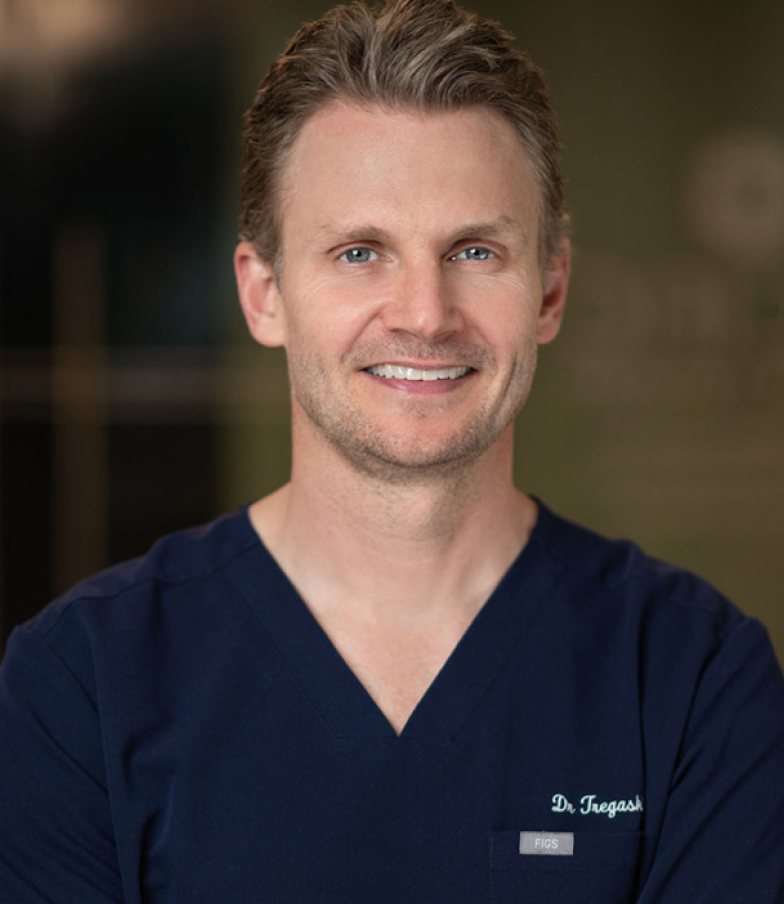
DR. ASHLEY TREGASKISS
COSMETIC, PLASTIC, AND RECONSTRUCTIVE SURGEON | BLOG
Dr. Ashley Tregaskiss is a board-certified plastic surgeon in Vancouver with over 20 years of experience and a practice increasingly dedicated to advanced facial and neck rejuvenation.
Following a decade at Vancouver General Hospital treating complex craniofacial trauma and head and neck conditions, he transitioned fully into private practice in 2024. This background provides a level of anatomical expertise and surgical precision that directly informs his aesthetic work.
Dr. Tregaskiss specializes in facelift and neck lift surgery, eyelid rejuvenation, facial fat transfer, and laser-based skin rejuvenation. He has particular expertise in combining facial surgery with laser treatments to enhance skin quality and achieve more refined, natural results. His approach is defined by careful planning, technical precision, and a commitment to outcomes that are balanced, elegant, and undetectable.